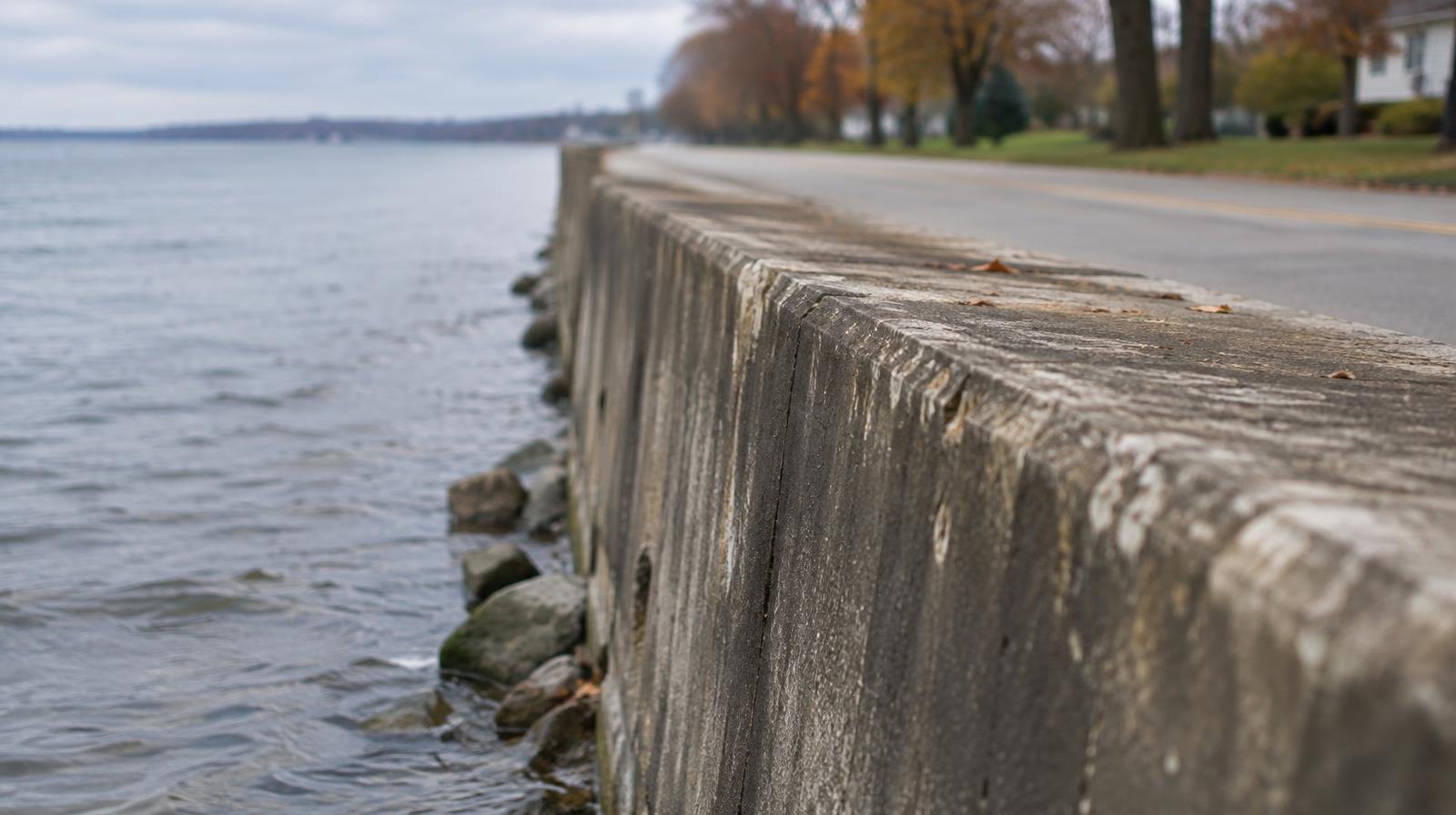
Grosse Pointe Farms and Grosse Pointe Shores are studying whether natural shoreline features could replace portions of the aging concrete seawall along Lake St. Clair, with federal funding supporting feasibility and engineering work.
The Great Lakes Commission announced Oct. 28 that it is partnering with the Michigan Department of Environment, Great Lakes and Energy (EGLE), the two communities and engineering firm Hubbell, Roth & Clark on the project.
The study covers approximately three miles of shoreline along Lakeshore Road.
Engineers will evaluate whether nature-based shoreline protection can reduce wave energy, manage erosion and improve fish and wildlife habitat while protecting nearby infrastructure.
The Great Lakes Commission said a public meeting to update residents about the project was held Oct. 21 in Grosse Pointe Farms.
Federal funding supports shoreline study
According to the Great Lakes Commission's project description, Grosse Pointe Farms has received approximately $788,000 through the Great Lakes Restoration Initiative.
The funding comes through federal and state partnerships involving the U.S. Environmental Protection Agency, EGLE and the commission.
Grosse Pointe Farms will manage the project's feasibility and design phases locally in partnership with Grosse Pointe Shores.
Hubbell, Roth & Clark and the Michigan Department of Natural Resources Fisheries Division are also participating.
The project remains in the planning stage. The study and engineering work do not represent approval to replace the existing seawall.
Restoration could improve coastal habitat
The Great Lakes Commission reports that at least 90% of the U.S. shoreline of Lake St. Clair is hardened with seawalls or rock barriers.
Those structures limit opportunities for natural shoreline habitat that supports fish and other wildlife.
The Grosse Pointe project focuses on a large stretch of publicly owned shoreline where restoration could improve habitat while addressing erosion and changing lake conditions.
The feasibility phase will examine potential restoration opportunities along approximately three miles of shoreline, with a planning goal of up to 120 acres of coastal habitat.
A subsequent engineering and design phase will focus on approximately 1,800 feet of shoreline at two potential pilot locations.
Those locations could support restoration of about 18 acres of habitat.
The figures describe potential restoration outcomes rather than construction commitments.
Engineers will evaluate possible alternatives
The project will examine approaches that use natural shoreline features to reduce wave energy and manage erosion.
The Great Lakes Commission identifies improved water quality, fish and wildlife habitat, shoreline resilience and recreational opportunities among the project's potential benefits.
The engineering work is intended to help determine which alternatives could be suitable for future restoration.
Any eventual construction would require additional decisions and implementation work beyond the current feasibility and design effort.
For now, the two communities are evaluating whether nature-based protection can provide a practical alternative to portions of the existing concrete seawall.